pp. 54–60
Annexure C — Minimum Debt Counselling System Requirements
Standards and parameters every debt counsellor restructuring system must meet, including outputs and audit requirements.
Clauses in this section
- 1p.56IntroductionIntroduction The purpose of this annexure is to define the standards that debt counsellors system providers must comply with. The manner in and integrity with which eligibility, affordability and reckless lending assessments are supported, debt restructuring proposals are formulated and payments are allocated to different credit providers, debt counsellors, PDA’s and lawyers constitutes a critical factor in the success of the debt review process. Given the complexity of these tasks systems support is required and the success in meeting this requirement is therefore determined by the different debt counselor systems solutions and debt restricting application software, which debt counsellors utilise. There are around 5 different software packages available and more than 90% of the registered debt counsellors use one of these (2 of the applications dominate the market). These software packages were developed and supported by either payment distribution agents or debt counseling firms based upon their experience in debt mediation or debt administration. The NCR task team recognizes the need for a framework of parameters, which could be used to evaluate debt counselor system solutions and the rules applied in debt restructuring software packages. This should facilitate increased reliability, trust and consistency in conducting debt reviews and the development of debt restricting proposals. The task team therefore proposes that the NCR publishes guidelines which should:
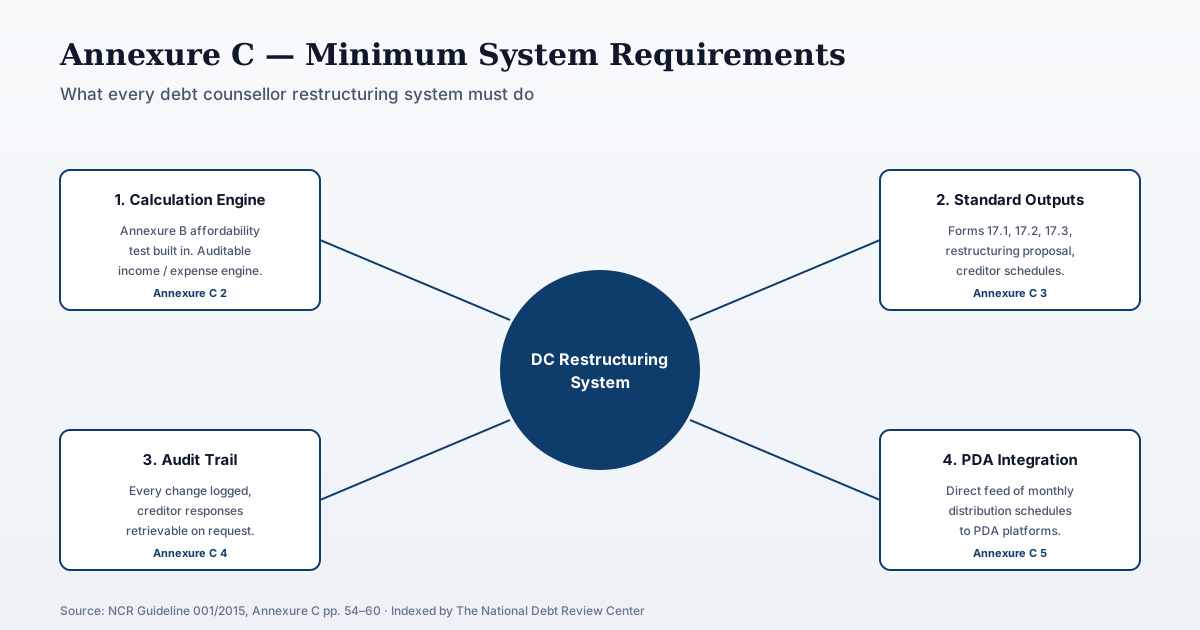
- 2.1p.57The debt restructuring systemThe debt restructuring system must generate a summary of the affordability assessment (including comments on the restricting of assets and liabilities where relevant) which was conducted by the debt counselor in the determination of the amount which is available for distribution to credit providers. The summary of the affordability assessment must be in the format as per the guidelines. It must include a summary of the consumer’s income and expenditure at the time of applying for debt counseling as well as a summary of the income and expenditure after any reductions agreed between the debt counselor and consumer.
- 2.2p.57The system
- 2.2.1p.57A summarized debt re-arrangement proposal, whichA summarized debt re-arrangement proposal, which must include:
- 2.2.2p.57A full amortization schedule for each debt includedA full amortization schedule for each debt included in the proposal.
- 2.3p.57The systemThe system must also produce a PDA payment collection and distribution plan through which the debt re-arrangement plan will be implemented.
- 2.4p.57The system auditThe system audit should evaluate both the rules, which are applied in performing the debt restructuring, as well as whether the internal controls are appropriate to make sure consistency and integrity.
- 2.5p.57The system
- 2.5.1p.58The basis of allocating the amount available for distributionThe basis of allocating the amount available for distribution to each credit agreement or category or credit agreements, including any method of prioritization or ‘ranking’ of different types of credit agreement ;
- 2.5.2p.58The basis on which the repayment obligations and repayment termThe basis on which the repayment obligations and repayment term are calculated for credit facilities (and any agreement for which a repayment and repayment term is not defined in the agreement).
- 2.5.3p.58The basis on which credit agreementsThe basis on which credit agreements are selected for payment interruptions (deferral of payments per the Act) and how the duration and extent of these interruptions are calculated.
- 2.5.4p.58The basis for extending the repayment period for differentThe basis for extending the repayment period for different categories of credit agreement, the method for calculation of such term extension as well as limits imposed (if any).
- 2.5.5p.58The extent to which interest rateThe extent to which interest rate are reduced on any particular type of credit agreement as well as the methodology which is applied to:
- 2.5.6p.58The basis for the allocation of the surplus cash, which becomesThe basis for the allocation of the surplus cash, which becomes available when an agreement is paid off, to the remaining creditors.
- 2.5.7p.58Whether payment escalationsWhether payment escalations are included (based on expected future increases in the consumer’s income), the basis for the calculation of any such payment escalations and the manner in which this is treated in the debt repayment plan.
- 2.5.8p.58The debt restructuring systemThe debt restructuring system must include a module which would support the debt counselor in the identification and management of reckless loans. This should include the functionality to produce a chronological listing of agreements, calculation of the cumulative repayments when each new agreement was entered into and comparison of the cumulative repayments to the adjusted salary at the stage when each agreement was entered into.
- 2.5.9p.58The debt restructuring systemThe debt restructuring system must apply the ‘in duplum rule’ in section 103(5) of the NCA where applicable in generating the payment plan proposed.
- 2.5.10p.58The debt restructuring softwareThe debt restructuring software must include sufficient internal controls to make sure that:
- 2.5.11p.59Every systemEvery system must be subject to an annual audit (or review) by and independent appropriately qualified external firm, in order to confirm the continued compliance of the system with the guidelines and parameters.
- 3p.59Parameters for debt restructuring rule solutionsParameters for debt restructuring rule solutions Rules applied in the restructuring of consumer debt obligations are a critical success factor in the debt review process. Such rules, in order to succeed in the process have to:
- 3.1p.59The task team accordingly proposes that all debt restructuring
- 3.1.1p.59The debt restructuring rulesThe debt restructuring rules must drive an outcome that results in the consumer rehabilitating his/her over-indebtedness situation within the shortest possible period given the particular circumstances and available debt re-arrangement measures;
- 3.1.2p.59All credit providersAll credit providers must receive consistent treatment per credit agreement category under the rules in terms of the proposed restructuring of each agreement, in that:
- 4.1p.60CIF should establish a “Sub-Committee” which shouldCIF should establish a “Sub-Committee” which should include both debt counselor and credit provider representatives, which should be responsible for the review of any new debt restructuring software packages and for the periodic review and monitoring of any existing systems. This committee should also be responsible to evaluate any complaints by debt counsellors or credit providers in respect of any of the systems or system providers. INDUSTRY AGREED CONSENSUAL DEBT RESTRUCTURING RULES TO BE DEPLOYED UNDER THE SECTION 48 (1) INDUSTRY CODE OF CONDUCT TO COMBAT OVER-INDEBTEDNESS Summarised debt restructuring rules under the envisaged Section 48(1) Industry Code to Combat Over-Indebtedness accepted by the credit industry
Based on NCR Guideline 001/2015. Indexed and published by The National Debt Review Center.